
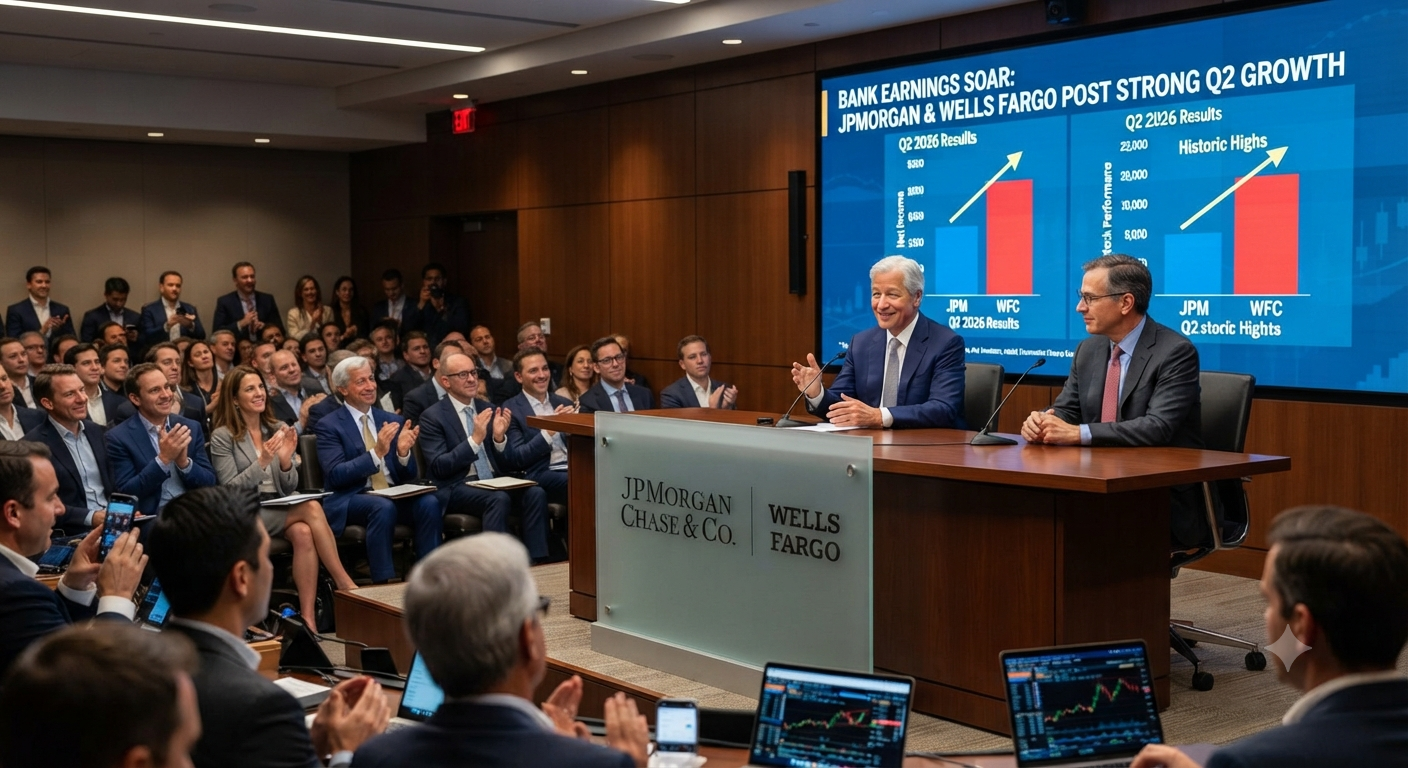
The second quarter of 2026 has provided a definitive “temperature check” for the U.S. economy, with major financial institutions delivering results that far exceeded analyst expectations. As of July 14, 2026, the banking sector—led by stalwarts like JPMorgan Chase and Wells Fargo—has showcased remarkable resilience, reporting record-breaking profits and significant revenue growth despite a backdrop of geopolitical uncertainty and fluctuating market conditions.
JPMorgan Chase: A Record-Breaking Quarter
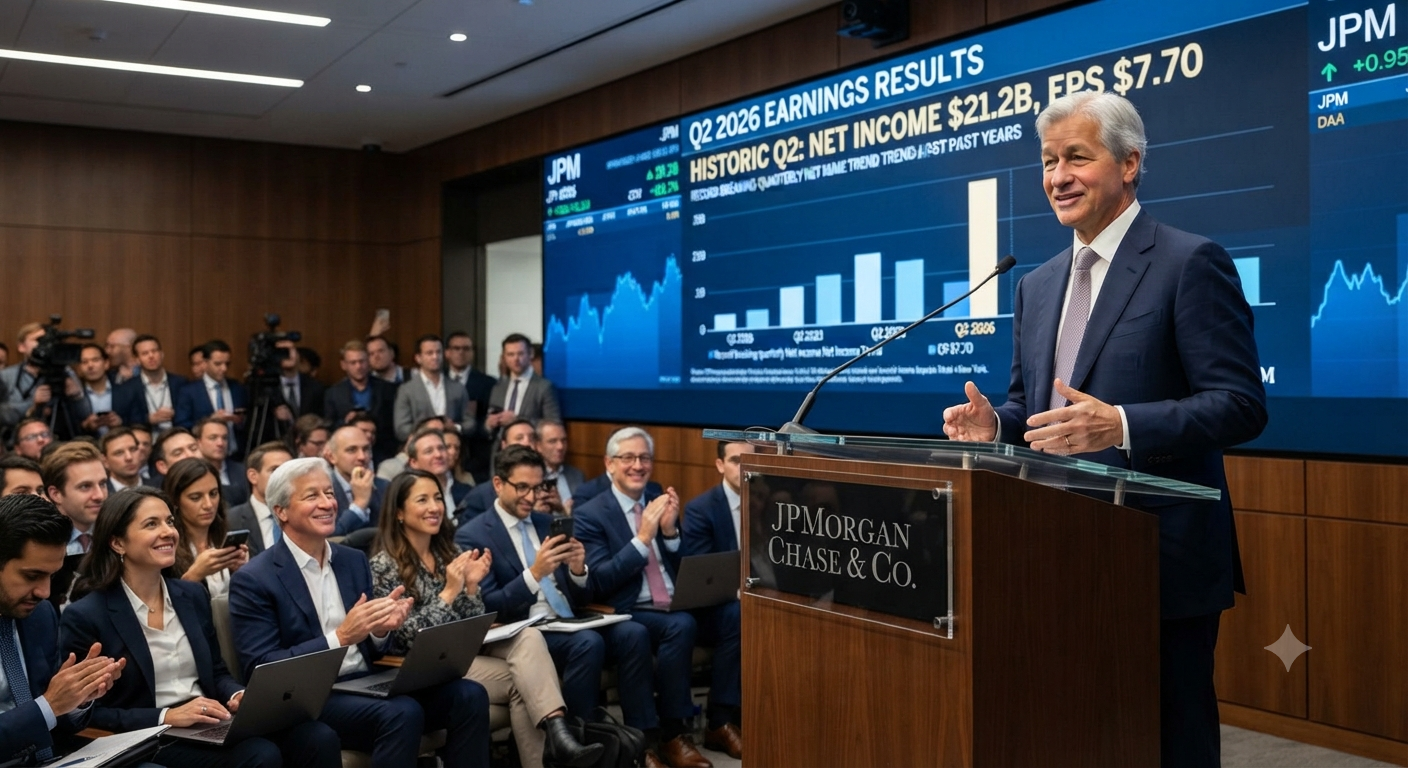
JPMorgan Chase delivered a historic performance in Q2 2026, reporting a net income of $21.2 billion, or $7.70 per share. This result shattered Wall Street’s consensus estimates, which had projected earnings per share to land between $5.44 and $5.59.
The drivers of this exceptional performance were broad-based:
- Trading Surge: Equity Markets revenue experienced an 86% jump, reaching $6 billion. This growth was fueled by high-speed trading desks taking advantage of significant market volatility.
- Investment Banking: Fees climbed 30% compared to the previous year, marking the highest level for the division since 2021.
- Strategic Gains: The bank’s bottom line was further bolstered by a $4.6 billion gain on its stake in Visa, alongside $1.0 billion in gains from specific equity investments.
- Operational Breadth: Total managed revenue rose 27% year-over-year to $58.0 billion, with every line of business—including consumer banking and wealth management—posting record figures.
Wells Fargo: Growth Across All Segments
Wells Fargo also delivered a “meaningful beat” against analyst expectations, signaling successful momentum in its post-asset-cap growth strategy. The bank reported earnings per share of $2.00, comfortably surpassing the $1.72 forecast by analysts.

The bank’s growth was characterized by strength across all operating segments:
- Revenue Growth: The bank reported total revenue of $22.62 billion, exceeding the consensus estimate of $21.87 billion.
- Segment Performance: Markets revenue surged roughly 24%, Corporate and Investment Banking revenue grew 16%, and Wealth and Investment Management rose 13%.
- Expense Management: Total expenses rose by only 2%, and non-revenue-related expenses declined year-over-year, driving positive operating leverage.
- Shareholder Returns: Reflecting confidence in its financial health, Wells Fargo announced plans to raise its third-quarter common stock dividend by 11% to $0.50 per share and noted that it had repurchased $3 billion of common stock during the quarter.
Macro Context: Volatility as Opportunity
The success of these banking giants in Q2 2026 highlights a counterintuitive reality: market volatility is not necessarily the “enemy” of the banking sector. While geopolitical tensions—such as the conflict involving Iran and ongoing energy price concerns—created uncertainty, the resulting “exaggerated price movement” provided ample opportunity for banks’ trading and investment divisions.
Furthermore, the broader economic environment remains buoyed by strong corporate earnings and an ongoing AI-driven capital expenditure cycle. While the infrastructure buildout for AI is capex-intensive and has contributed to inflationary pressures in the short term, it has simultaneously driven substantial activity within the banking sector as companies finance, build, and invest in the essential hardware and software supply chains.
As these banks move into the second half of 2026, their ability to navigate these macro variables—inflation, policy uncertainty, and geopolitical shifts—remains the key benchmark for the health of the broader U.S. economy. For investors, these results validate the thesis that diversified, large-scale financial institutions are uniquely positioned to capture value even when the global landscape is fraught with change.







Leave a Reply